
3 Ways to Drain Water from Your Roof

Rainwater needs a clear path off your roof and away from your home. Without proper drainage, runoff can collect near the foundation, erode the surrounding soil, and contribute to moisture problems in basements and crawl spaces. A sloped roof helps water run off, but it does not necessarily direct that water safely away from the building. You need a drainage system that collects the runoff and moves it to a suitable discharge point.
There are three ways to manage roof runoff: installing a rain gutter system, extending your downspouts, and using roof scuppers. The right option depends on your roof design, property layout, and drainage requirements.
1. Install a Rain Gutter System
A properly designed rain gutter system is one of the most common ways to drain water from a residential roof. Gutters collect rainwater along the roof edge and direct it through downspouts to a suitable discharge point. Without gutters, water can fall directly around the perimeter of your home. Depending on the soil, landscaping, roof overhang, and ground slope, this runoff may contribute to soil erosion or allow water to collect near the foundation.
Types of Rain Gutters
Rain gutters are available in different materials, shapes, and sizes. Common materials include aluminum, copper, galvanized steel, and vinyl. Wood gutters are also available for certain architectural applications.

Two common gutter profiles are:

- K-style gutters: These have a decorative front profile and a relatively wide channel. They are commonly used on residential properties and are available in different sizes.
- Half-round gutters: These have a rounded, U-shaped channel and a more traditional appearance. They are often selected for homes where the gutter profile is part of the architectural design.
The right material and profile depend on your budget, property design, expected rainfall, and maintenance requirements. Aluminum is a popular option because it is lightweight and available in different styles and colors. Copper is another option for homeowners looking for a distinctive appearance and long-lasting material.
What Makes a Gutter System Effective?
Installing gutters is only part of the solution. The system also needs to be properly sized, sloped, supported, and maintained.
Consider these factors:
Correct gutter size
The gutter must be large enough to handle the amount of water flowing off your roof. Roof area, roof pitch, local rainfall intensity, and the number and placement of downspouts all affect the required capacity.
A larger gutter is not automatically the right choice for every property. A professional can assess the roof and recommend a suitable size.
Proper gutter slope
Gutters should have a consistent downward slope toward their outlets so water can flow toward the downspouts instead of collecting in the channel. The required slope depends on the gutter system and installation specifications.
Clear gutters and downspouts
Leaves, dirt, and other debris can restrict water flow. When a gutter or downspout becomes clogged, rainwater may overflow and collect around the property.
Inspect your gutters regularly and arrange cleaning based on nearby trees, seasonal debris, and the condition of the system. Check them after heavy storms as well.
Secure installation
Sagging sections, loose hangers, damaged seams, and holes can interfere with drainage. Repairing these problems helps maintain the system’s performance and reduces the risk of water damage.
2. Extend Your Downspouts
Gutters collect water from the roof, but downspouts determine where that water goes next. If a downspout releases water too close to your home, runoff can saturate the soil around the foundation. A downspout extension helps move the discharge farther away from the building.
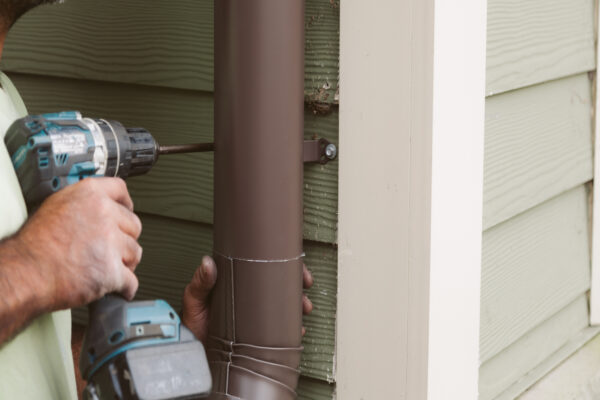
Extensions are available in different materials and designs, including aluminum extensions, flexible plastic extensions, and underground drainage pipes.
Above-Ground Downspout Extensions
An above-ground extension connects to the bottom of the downspout and carries water away from the house. This is a practical option for properties with enough open ground around the building. The extension should direct water toward a suitable area where it can flow away without causing erosion, flooding, or problems for neighboring properties.
Make sure the extension does not block walkways, driveways, or other frequently used areas. In colder climates, avoid directing water onto a driveway or walkway where it could freeze and create a slipping hazard.
Underground Downspout Extensions
You can also connect a downspout to an underground drainage pipe. This keeps the pipe out of sight and can move roof runoff to a more suitable discharge location. However, underground drainage needs proper planning. The pipe must have an appropriate route and slope, and it should discharge to a suitable outlet or drainage area.
For residential drainage, U.S. Department of Energy guidance recommends directing downspout discharge to sloping ground at least five feet from the foundation, or to an underground catchment system at least ten feet away. Underground gutter drainage should not be connected to a perforated foundation drain.
The correct distance and discharge method can vary depending on local requirements, soil conditions, and the property’s drainage design.
Check the Ground Around Your Foundation
If water has been overflowing from your gutters for a long time, inspect the ground around the house. Repeated runoff can wash away soil and create channels or depressions near the foundation. The ground should generally slope away from the building so surface water can drain away rather than collect beside it.
Simply adding soil to an eroded area may not solve the underlying drainage problem. Check the grading and the final discharge location to make sure water will not return toward the house.
3. Install Roof Scuppers
Scuppers are openings installed through a roof edge, parapet wall, or curb to allow rainwater to drain from a roof. They are commonly used on flat and low-slope roofs where water needs a defined outlet. A scupper may discharge water directly outside the building or direct it into a gutter, conductor box, or downspout.
How Do Roof Scuppers Work?
Rainwater flows across the roof toward the drainage opening. Once it reaches the scupper, water passes through the opening and exits the roof area. Scuppers can be part of a primary roof drainage system or serve as secondary overflow outlets. Secondary scuppers provide another path for water if the primary drainage system becomes blocked or cannot handle the runoff.
They are particularly useful on roof designs with parapet walls, where water cannot simply flow over the roof edge.
Benefits of Roof Scuppers
Scuppers offer several advantages when properly designed and installed:
- Help remove standing water: They provide an outlet for water collecting on flat or low-slope roofs.
- Can provide emergency overflow: Secondary scuppers can help prevent excessive water accumulation if the primary drainage system becomes blocked.
- Work with other drainage components: Scuppers can direct water into gutters, conductor boxes, and downspouts.
- Can complement the building design: Their appearance and placement can be incorporated into the roof’s architectural details.
Important Scupper Installation Considerations
Scuppers are not simply openings that can be added anywhere along a roof wall. Their size, location, and elevation must suit the roof’s drainage design. The opening also needs proper flashing and waterproofing to prevent water from entering the roof or wall assembly. Poorly designed scuppers can allow water to damage the building exterior or discharge onto areas where it creates a hazard.
For this reason, scupper installation and roof drainage design should be handled by qualified professionals. Local building codes may also specify requirements for primary and secondary roof drainage.
Which Roof Drainage Method Is Right for Your Property?
The best way to drain water from your roof depends on the roof design and the conditions around your home. A rain gutter system is a practical choice for most sloped residential roofs. Downspout extensions help carry the collected water farther away from the foundation. Scuppers are more commonly used on flat or low-slope roofs, particularly those with parapet walls.
These methods can also work together. For example, a gutter system can collect water from a sloped roof while downspout extensions direct it to a suitable drainage area. A flat roof may use scuppers that connect to gutters or downspouts.
The important thing is to make sure the entire drainage system has enough capacity and sends water to a safe discharge location.
Protect Your Home with Proper Roof Drainage
Roof runoff can cause problems when it is not properly managed. A well-designed gutter system, correctly positioned downspout extensions, and suitable roof drainage outlets can help protect your foundation and surrounding property. If your gutters are overflowing, your downspouts are discharging too close to the house, or you are planning a new gutter installation, it is worth having the drainage system assessed.
Storm Master Gutters provides gutter installation, cleaning, and repair services for residential and commercial properties. Our team can help you evaluate your gutter system and find a solution suited to your property.
Contact us today to request a quote.







Gutter chahiye 10 pc
Why don’t we just let the rainwater just run off the roof onto the garden?